Why Outdoor Use Demands More From Your Multi-Tool
Using a multi-tool in the great outdoors is fundamentally different from urban everyday carry. Nature doesn't care about your tool's limitations—when you need to cut rope, start a fire, or make emergency repairs miles from the nearest town, your multi-tool needs to deliver. The consequences of tool failure in wilderness settings range from minor inconvenience to genuine safety concerns.
This guide examines the specific features that separate capable outdoor multi-tools from those better suited to desk drawers. Whether you're a casual camper or a serious backcountry explorer, understanding these features will help you choose a tool that performs when it matters most.
Corrosion Resistance: Your First Priority
Outdoor environments expose your multi-tool to moisture in countless ways—rain, humidity, river crossings, morning dew, and sweaty hands. A tool that develops rust spots after a weekend camping trip isn't just aesthetically disappointing; it's potentially unsafe and will degrade in function over time.
What to Look For
Stainless steel construction is the baseline requirement. All reputable outdoor multi-tools use stainless steel for the frame, but blade steel varies. Look for 420HC, 440C, or higher-grade stainless steels that balance corrosion resistance with edge retention.
Black oxide coatings add an extra layer of protection while reducing glare that might spook wildlife. Some tools feature titanium or DLC (diamond-like carbon) coatings for premium corrosion resistance and hardness.
Post-trip maintenance matters regardless of materials. Rinsing your tool with fresh water, drying thoroughly, and applying a light oil keeps even the best stainless steel performing optimally for years.
The Knife Blade: Your Most Used Tool
For outdoor use, the knife blade becomes the multi-tool's most critical component. You'll use it for everything from food preparation to gear repair to emergency situations.
Blade Features That Matter
Locking mechanism: Outdoor cutting tasks often require pressure and awkward angles. A blade that could close on your fingers is dangerous. Insist on a positive locking mechanism—liner lock, frame lock, or lockback—that holds the blade securely open during use.
Blade length: Longer blades (3+ inches) provide better cutting capability for camp tasks. However, some wilderness areas and countries have blade length restrictions, so know the regulations for your destination.
Serrations: A partially serrated blade handles rope, webbing, and fibrous materials much better than a plain edge alone. Consider a tool with both plain and serrated sections, or one with separate plain and serrated blades.
Blade steel quality: Premium steels like 154CM, S30V, or CPM-S35VN hold an edge longer than budget steels. When you're days from a sharpening stone, edge retention becomes crucial. However, harder steels are also more difficult to field-sharpen, so consider your sharpening skills and equipment.
Pliers: Grip, Bend, and Cut
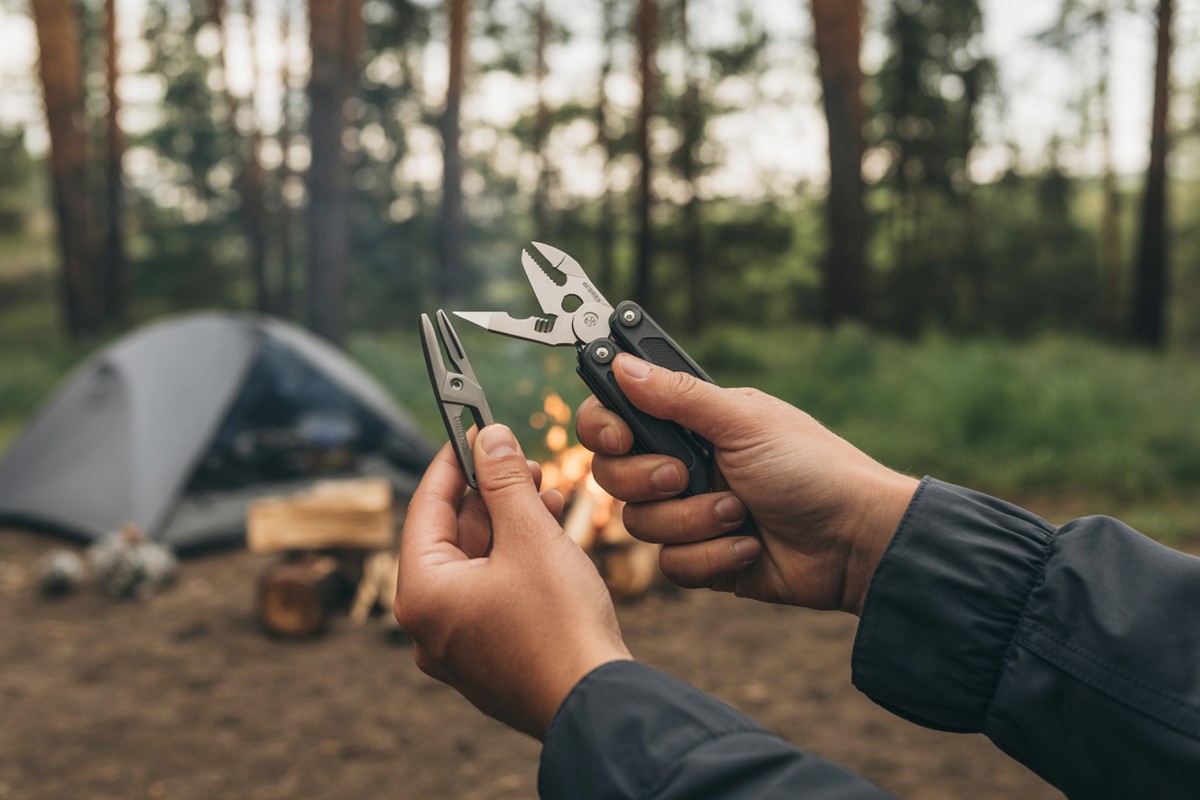
Strong pliers expand your outdoor capability enormously. From removing fish hooks to bending tent stakes to gripping hot cookware, quality pliers earn their weight quickly.
Outdoor Plier Priorities
Needle-nose design reaches into tight spaces where fingers can't go. Whether extracting a fish hook from a lure or pulling cactus spines, pointed tips provide precision.
Wire cutters should handle at least light-gauge wire. Hard-wire cutters handle fencing and thicker materials, while standard cutters suffice for fishing line, cordage, and light wire.
Spring-loaded opening reduces hand fatigue during extended use. When you're processing a catch of fish or making multiple repairs, spring-action pliers are noticeably more comfortable.
Replaceable wire cutters on premium tools allow you to restore cutting capability without replacing the entire tool. This feature provides excellent long-term value for heavy users.
Saw Capability: Cutting More Than Cheese
A good saw transforms your multi-tool into a genuine woodworking instrument. For outdoor use, saw capability can be essential for gathering firewood, building shelters, or clearing trails.
Saw Considerations
Tooth design varies from aggressive wood-cutting patterns to finer designs for general materials. Outdoor use benefits from aggressive teeth that can handle green and dry wood efficiently.
Blade length determines the thickness of material you can cut. Longer saws (3+ inches) handle branches that shorter saws struggle with. However, longer saws add weight and bulk.
Saw vs. hatchet: Multi-tool saws won't replace a proper saw or hatchet for serious wood processing. They're best for smaller branches, notching, and precision cuts. Carry a separate saw or hatchet if you anticipate significant wood cutting.
Specialized Outdoor Features
Beyond the basics, several specialized features prove particularly valuable in outdoor settings:
Awl/Reamer
The awl punches holes in leather, fabric, and other materials. It's invaluable for emergency gear repairs—adding new holes to belts, punching drainage holes in containers, or starting holes for improvised repairs.
Can/Bottle Openers
Simple but essential. Opening canned food and beverages without these tools ranges from difficult to dangerous. Most quality multi-tools include both as standard features.
File
A diamond or metal file maintains other tools and sharpens hooks. It's also useful for smoothing rough edges on improvised repairs or shaping wood.
Scissors
Spring-loaded scissors handle tasks where a knife is overkill or imprecise. Cutting fishing line, trimming bandages, and general light cutting become much easier with quality scissors.
Bit Driver
Modern outdoor gear often features Torx, hex, and Phillips fasteners. A bit driver with interchangeable bits handles the variety of fasteners you'll encounter on stoves, bikes, and other equipment.
Weather-Specific Considerations
Cold Weather
Cold hands struggle with small tools. Choose a multi-tool with larger implements that can be operated with gloves. Avoid tools with tiny, fiddly components that cold fingers can't manage. Metal handles conduct cold—consider models with textured or coated scales.
Wet Conditions
Beyond corrosion resistance, consider grip. Smooth stainless handles become dangerously slippery when wet. Textured scales, rubber inserts, or aftermarket grips provide secure handling in rain and humidity.
Extreme Heat
Metal tools left in direct sun become too hot to handle. Store your tool in a sheath or bag during hot weather. Be aware that some handle materials may degrade with prolonged UV exposure.
Weight and Carry Considerations
Ounces equal pounds, and pounds equal pain—especially on long hikes. However, sacrificing too much capability to save weight can leave you ill-equipped when problems arise.
Finding the Balance
Day hikes: A compact or even keychain tool may suffice when you're never far from the trailhead. Prioritize the knife and basic repair capability.
Overnight camping: A full-featured compact tool handles most camping tasks without excessive weight. The Leatherman Skeletool or similar tools offer excellent capability-to-weight ratios.
Extended backcountry trips: Consider a full-size tool despite the weight. When you're days from help, having comprehensive capability justifies the extra ounces. You might also carry specialized individual tools (knife, saw, pliers) rather than a single multi-tool.
Our Top Picks for Outdoor Use
Based on the features discussed, here are our recommendations:
Best Overall: Leatherman Signal—Purpose-built for outdoor use with ferro rod fire starter, emergency whistle, and hammer.
Best Value: Leatherman Wave+—The classic choice with proven reliability and comprehensive features.
Best Lightweight: Leatherman Skeletool—Minimal weight with maximum essential capability.
Best Heavy-Duty: Leatherman Surge—When you need the most capability regardless of weight.
Find Your Perfect Outdoor Multi-Tool
Every outdoor adventure is different, and your multi-tool should match your specific activities. Our ToolMatch recommendation tool asks the right questions about your outdoor use to suggest tools that will perform when nature tests them. Whether you're a weekend camper or a serious wilderness explorer, let ToolMatch find your perfect outdoor companion today!
Ready to Find Your Perfect Multi-Tool?
Use our free ToolMatch recommendation tool to get personalized suggestions based on your specific needs, budget, and preferences.
Get Your Recommendation